
Knowledge Center · ADULT ORTHODONTICS
Adult Orthodontics Starts With Planning
Adult orthodontics is not about choosing brackets or clear aligners first. It begins with digital diagnosis and treatment planning using scans, photographs, imaging, and bite records before choosing the appropriate treatment method.
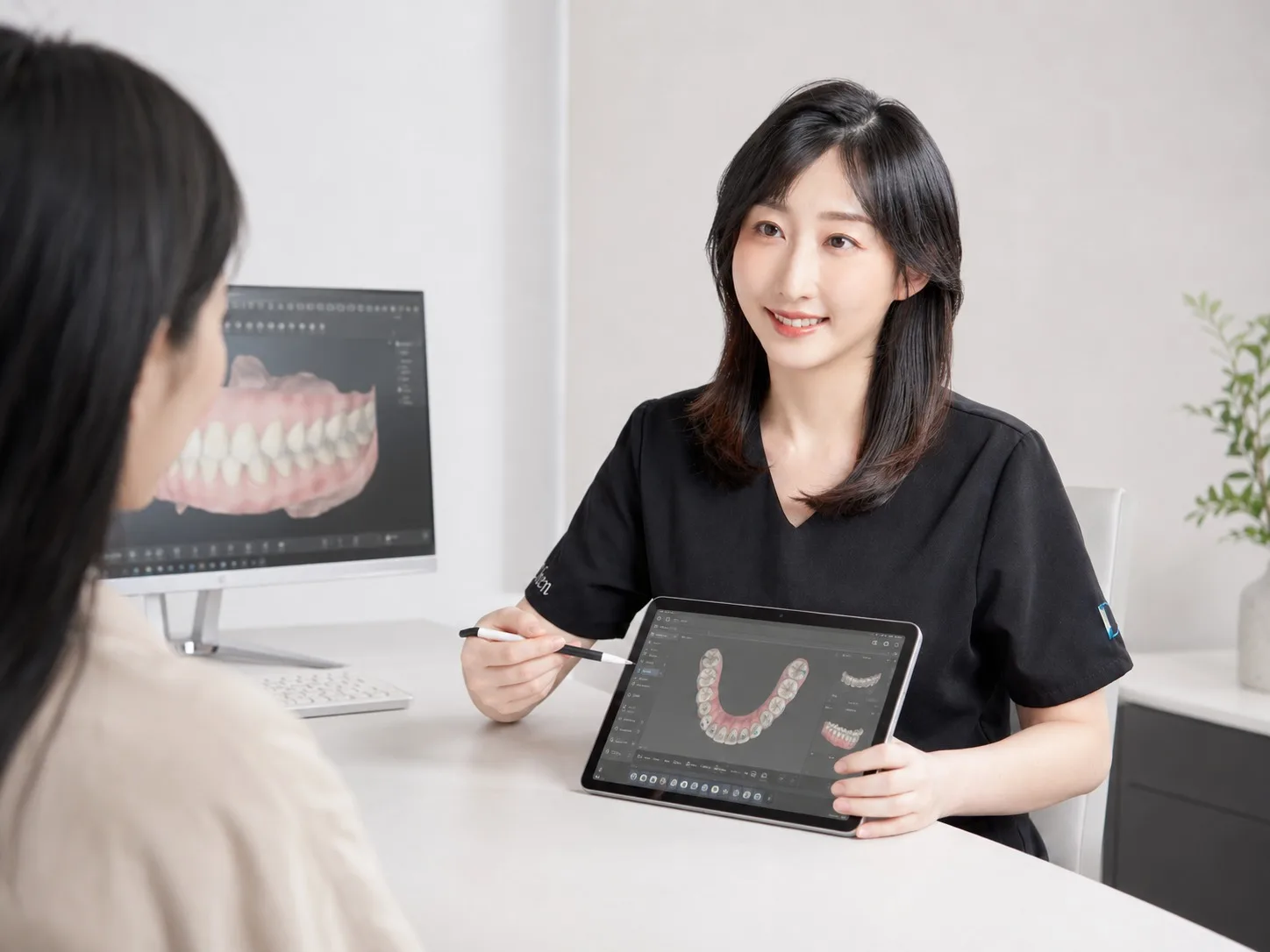
Many adults who are considering orthodontic treatment first ask: am I suitable for clear aligners, or do I need braces? Which option is faster?
These are practical questions.
But before treatment begins, the more important question is not which appliance to choose. It is: where should the teeth move? How should the bite be built? How should the smile proportion be adjusted? How will the result be maintained?
Whether the final tool is brackets or clear aligners, orthodontics is not simply “wearing something and letting the teeth become straight.”
The real first step is diagnosis and treatment planning.
Design first, then choose the tool
There are many orthodontic tools. Some patients are better suited for clear aligners, some for bracket treatment, and some for a combination of methods.
But the tool is only the execution method.
Before treatment begins, the dentist needs to use intraoral scans, photographs, imaging records, bite assessment, and the patient’s goals to determine the direction, sequence, and limits of tooth movement.
For example:
- which teeth need to move;
- which teeth need to remain stable;
- whether space needs to be created;
- whether IPR, expansion, or extraction should be considered;
- how the bite relationship should be established;
- whether the front tooth position and smile proportion are harmonious;
- how the result should be retained after treatment.
Only after these decisions are made does the treatment move into execution: through brackets and wires, or through a series of clear aligners.
So the core of adult orthodontics is not “which appliance is more advanced.” It is whether the plan is clear and whether the movement path is reasonable.
Bracket orthodontics can also be digitally planned
Many people assume that only clear aligners have digital treatment plans, while bracket orthodontics simply means the dentist places each bracket by hand and adjusts the teeth gradually.
But digital bracket orthodontics should not be understood that way.
In a modern digital bracket workflow, the dentist can design the treatment on a digital model first: target tooth positions, bracket placement, wire coordination, and bite goals. After the design is complete, an indirect bonding guide can help transfer the planned bracket positions into the patient’s mouth more consistently.
This step is not just about saving bonding time. It helps bracket placement stay closer to the original plan.
Bracket position matters.
It affects tooth movement direction, torque control, treatment efficiency, and later adjustments. When bracket positions are closer to the design, the following movement is more likely to proceed according to the plan.
So bracket orthodontics does not have to be “traditional and rough.”
It can also be precise execution after digital design.
Clear aligners are also about planning, not just trays
Clear aligners have clear advantages: they are more discreet, easier to clean around, and often fit adult work and social needs better.
But clear aligner treatment is not simply “software moving teeth automatically.”
Every step of tooth movement, attachment design, IPR, aligner staging, follow-up, and bite adjustment needs to be judged by the dentist according to real oral conditions.
The animation can help patients understand the treatment direction, but it is not a guarantee of the result. What really matters is how the doctor designs the plan, controls tooth movement, and adjusts according to treatment response.
So whether the tool is brackets or aligners, good orthodontic treatment is not about handing the case to a system. It is about the clinician connecting diagnosis, design, and execution.
Before adult orthodontics, why not look only at straight teeth?
For many adults, the most visible concern is whether the front teeth look straight when smiling.
That is understandable, because the front teeth are the easiest to see.
But when designing an orthodontic plan, the dentist does not look only at the front teeth. The arch form, upper and lower bite relationship, posterior support, periodontal condition, hygiene access, lip support, and smile proportion all need to be considered.
Some teeth may look only mildly irregular, but the underlying reason may involve lack of space, narrow arch form, bite relationship, or tooth inclination.
After teeth are aligned, it may also be important to consider whether veneers, ceramic crowns, implants, or other restorations will be involved.
Adult orthodontics is therefore not about putting teeth into a row. It is about making tooth position, smile proportion, bite relationship, and long-term maintenance conditions more reasonable together.
Digital records make the plan easier to understand
The scan, photographs, and imaging records before orthodontic treatment are not only for documentation.
The scan records tooth alignment, arch form, and bite relationship. Photographs help evaluate the smile, facial profile, and lip dynamics. Imaging records can help assess roots, bone structures, and other anatomical conditions.
When these records are brought together, the dentist can explain more clearly why teeth need to move in a certain way, why space may need to be created, why treatment has stages, and why retainers are needed afterward.
For patients, digital records make the treatment plan easier to understand.
Orthodontics becomes less about “the dentist says this is necessary” and more about seeing one’s own tooth conditions, treatment goals, and movement logic.
Brackets and aligners differ in execution
Brackets and clear aligners are not simply a hierarchy of better or worse.
Brackets use brackets, wires, and adjustments to control tooth movement. Clear aligners use a series of transparent trays and attachments. The biomechanics, follow-up rhythm, hygiene routine, comfort, and suitable cases are different.
But the logic before treatment is the same:
examination;
diagnosis;
treatment planning;
execution;
adjustment based on response;
retention and long-term maintenance.
So choosing brackets or aligners should not be based only on appearance or trend. It should be based on which method better fits the treatment goal of that specific case.
Orthodontics can create better conditions for veneers, implants, and restorations
Many adult orthodontic cases are not only about straightening teeth.
If teeth are in an unfavorable position, placing veneers directly may require more tooth adjustment.
If implant space is not ideal, the future implant crown may be difficult to design.
If the bite is not well coordinated, long-term use of restorations may be affected.
In these situations, orthodontics can first move teeth into a better position, creating better conditions for veneers, ceramic crowns, implants, or bite rehabilitation.
From this perspective, adult orthodontics is not an isolated procedure. It can be an important step in a complete treatment plan.
Retention is part of treatment
After orthodontic treatment is completed, retainers are not an optional add-on.
When teeth have moved into new positions, they need time to adapt to the new alignment and bite relationship. Retainers help maintain the teeth in their new position and reduce unnecessary movement.
Adults especially need to take retention seriously, because teeth can continue to shift subtly with age, bite forces, periodontal condition, and daily habits.
In a digital workflow, the final scan after treatment can also become an important record for retainer fabrication and future comparison. If a retainer is lost or teeth show mild changes later, the dentist can compare new records with the final records to understand where the change occurred.
How D4 approaches adult orthodontics
At D4, adult orthodontics does not begin with “brackets or aligners.” It begins with records, diagnosis, and treatment planning.
We first evaluate tooth alignment, bite relationship, periodontal condition, facial proportion, smile dynamics, existing restorations, missing tooth space, and long-term maintenance conditions. When needed, we also combine intraoral scanning, photography, CBCT, DSD design, or restorative planning to evaluate orthodontics within the complete treatment plan.
Bracket treatment can be digitally designed first and then transferred with bonding guides.
Clear aligner treatment also requires the doctor to design each movement and stage goal.
The two approaches do not replace each other. They are different execution tools selected for different cases.
The meaning of adult orthodontics is not only making teeth straight.
More importantly, it makes tooth position, smile proportion, bite relationship, and future maintenance clearer and more controllable.
If you are considering veneers, you may also read: Do Veneers Always Require Tooth Preparation?
FAQ
Should adult orthodontics start by choosing braces or clear aligners?
Not necessarily. The first step is examination and treatment planning. The dentist needs to determine where the teeth should move, how the bite should be established, whether space needs to be created, whether periodontal conditions support movement, and how the result will be retained. Only after the goals are clear should the execution tool be selected.
Do bracket braces also need digital planning?
Yes. Modern bracket orthodontics is not simply about placing brackets tooth by tooth by hand. The dentist can first build a digital plan using intraoral scans, photographs, bite records, and imaging, then plan target tooth positions, bracket placement, movement direction, and bite goals. Indirect bonding guides can then help transfer the planned bracket positions into the mouth more consistently.
Are clear aligners better than braces?
Not in every case. Clear aligners have advantages in appearance and hygiene, which are important for many adults. Brackets also have value in certain types of movement control, compliance requirements, or more complex cases. The key is not which tool looks more advanced, but which one best fits the patient’s tooth conditions, treatment goals, cooperation, and long-term maintenance.
Why are scans and photos needed before orthodontic treatment?
Intraoral scanning creates a 3D model of the teeth and bite, while photographs record the smile, facial profile, and lip dynamics. These records help the dentist understand tooth movement paths, smile proportion, bite relationships, and treatment stages. For digital bracket planning or clear aligner treatment, scan data is also an important foundation for planning and later comparison.
Can orthodontics improve the smile?
Yes, but the improvement is not only about making teeth straight. Orthodontics can influence tooth alignment, arch form, smile line, spacing, front tooth position, and lip support. For adults with aesthetic goals, the dentist often considers facial proportion, smile dynamics, and tooth shape together. Some cases improve significantly with orthodontics alone, while others may benefit from whitening, veneers, or restorative treatment afterward.
Why are retainers needed after orthodontic treatment?
Retainers help maintain the orthodontic result. After teeth move into a new position, the periodontal tissues and bite relationship need time to adapt. Teeth can also continue to shift slightly with age, bite forces, and daily habits. Wearing retainers as instructed helps keep the teeth more stable in their new position.
Can orthodontics be planned together with veneers, implants, or restorations?
Yes. Many adult cases benefit from combined planning. Orthodontics can move teeth into better positions before veneers, ceramic crowns, implants, or other restorative treatments. This can sometimes reduce unnecessary tooth reduction and make the final restoration position more reasonable. The key is to discuss orthodontics, restorations, implants, and periodontal conditions as one treatment plan.