
Knowledge Center · IMPLANT MAINTENANCE
Why Dental Implant Maintenance Matters More Than Many People Think
Dental implants still require long-term maintenance. Cleaning access, gum stability, bite forces, and regular reviews all affect long-term outcomes.
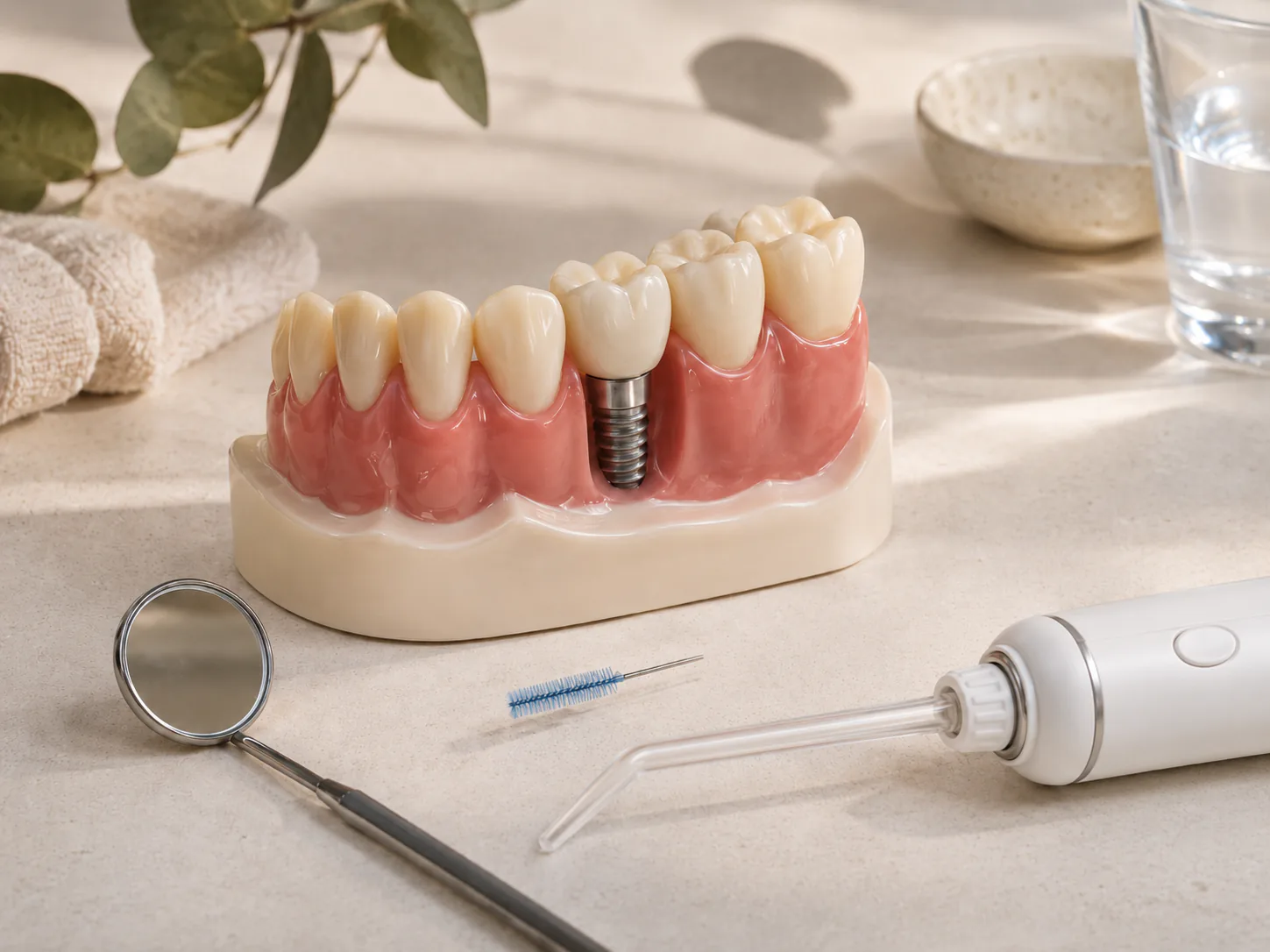
Many patients think implant treatment ends when the crown is delivered. In reality, implants require long-term cleaning and maintenance, just like natural teeth.
Implants do not have a periodontal ligament, and their response to inflammation and bite changes differs from natural teeth. If cleaning is difficult, gums remain inflamed, or bite forces are excessive, peri-implant tissues may gradually become unstable.
The Problem You May Be Facing
Common concerns include food trapping around an implant, gum bleeding, odor, difficulty cleaning around the crown, or discomfort years after implant treatment.
Some patients feel no pain, but a review may show bleeding, inflammation, bone level changes, or poor cleaning access around the implant crown.
What Really Needs to Be Evaluated
First, cleaning access matters. Crown contour, contact areas, and gum height affect whether floss, interdental brushes, or water flossers can reach the area.
Second, gum and bone stability matter. Long-term inflammation can develop into peri-implant mucositis or peri-implantitis.
Third, bite force matters. Implants do not have the same cushioning as natural teeth, so excessive force may affect screws, crowns, abutments, or bone.
Fourth, overall periodontal risk matters. If natural teeth have periodontal disease, implant maintenance needs extra attention.
How D4 Usually Checks
After implant restoration, D4 pays attention to crown contour, contact areas, gum margin, cleaning access, and bite contact. X-rays may be used to monitor bone level, and clinical checks help evaluate bleeding, probing depth, and soft tissue stability.
For patients with multiple implants, periodontal history, bruxism, or cleaning difficulty, the review schedule may be more structured.
What Patients Should Know Before Treatment
Implant care often requires more than a toothbrush. Floss, interdental brushes, water flossers, and professional maintenance may all be useful depending on implant position and crown shape.
Implants do not decay, but the gum and bone around them can still be affected by plaque.
Long-term stability depends on planning, crown design, daily cleaning, and regular maintenance together.
Common Misunderstandings
Implants do not decay, so are they maintenance-free?
No. The implant itself does not decay, but surrounding tissues can become inflamed.
Can a water flosser replace floss or interdental brushes?
It can help, but may not fully replace mechanical cleaning. Tools should match the space and crown shape.
If there is no pain, is the implant healthy?
Not always. Early inflammation may not be painful.
When to Consider a Consultation
If food traps around your implant, the gum bleeds, there is odor, cleaning is difficult, or it has been a long time since your last review, maintenance evaluation is recommended.
Related Pathway
This article belongs to the digital implant planning pathway and connects to periodontal stability and long-term maintenance.
FAQ
How often should implants be reviewed?
Frequency depends on periodontal condition, cleaning ability, implant number, and bite risk.
Is bleeding around an implant normal?
Persistent bleeding should be evaluated because it may suggest inflammation or cleaning difficulty.
Can I use regular floss around implants?
Sometimes, but interdental brushes, super floss, or water flossers may be more suitable depending on the design.
Does bruxism affect implants?
It can. Strong bite forces may affect the crown, screw, or surrounding tissue.