
Knowledge Center · DENTAL IMPLANTS
After Tooth Loss, When Should You Consider a Dental Implant?
Whether an implant is suitable after tooth loss depends on bone, gum tissue, neighboring teeth, bite, and final crown space.
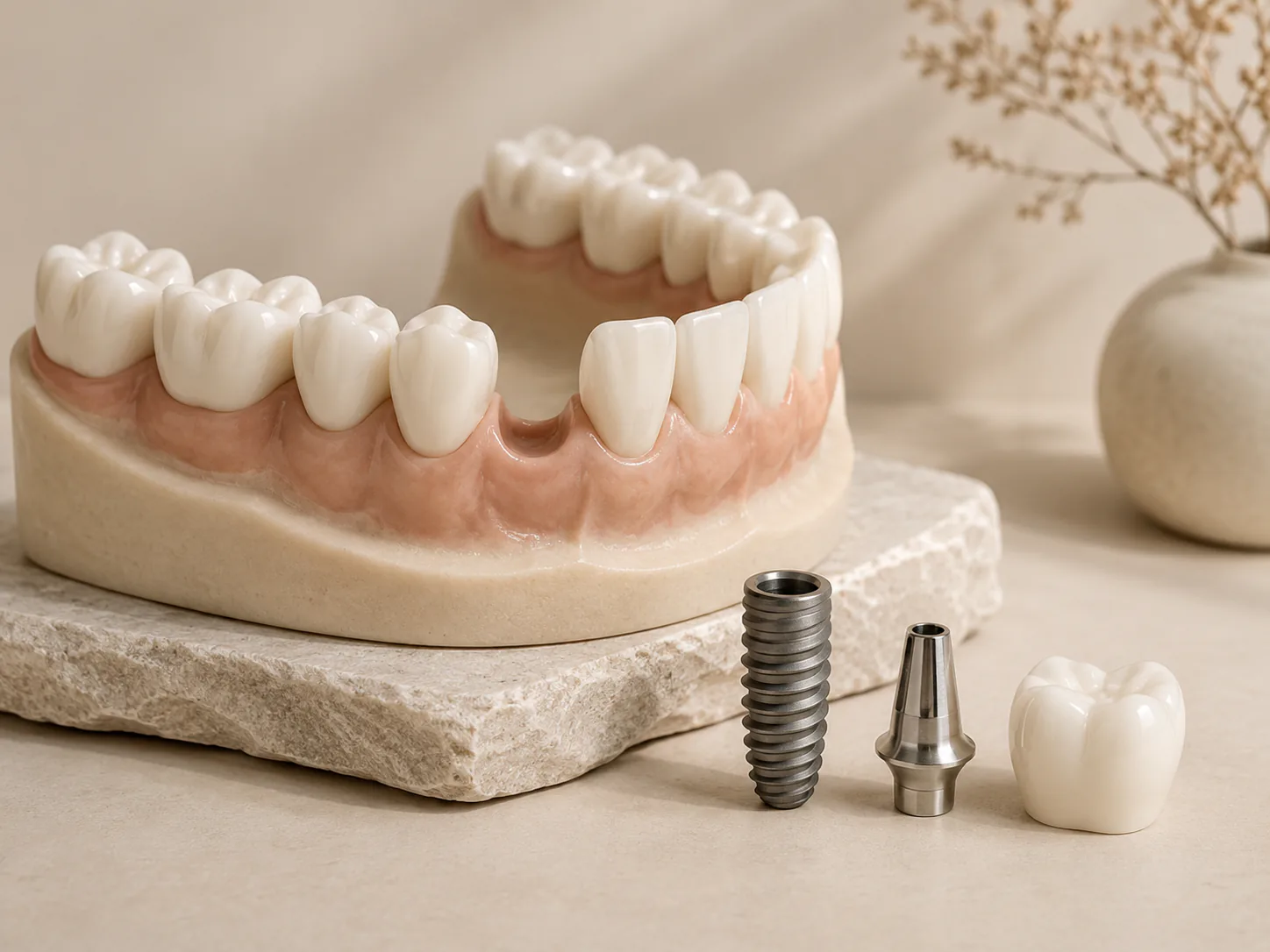
After losing a tooth, many people wait because there is no pain and they can still chew.
However, changes after tooth loss happen gradually. Neighboring teeth may tilt, opposing teeth may over-erupt, and bone or gum shape may change. By the time treatment is desired, space, bone, and bite may be more complicated.
The Problem You May Be Facing
Common situations include an extraction space, a missing molar, a failed bridge, repeated inflammation in a root canal tooth, or a retained baby tooth with a missing permanent tooth.
Patients often ask, “Can I wait?” The answer depends not only on pain, but on whether the missing space affects the arch, bite, cleaning, and future restorative space.
What Really Needs to Be Evaluated
First, location matters. Front teeth, premolars, and molars have different aesthetic and functional requirements.
Second, bone and gum conditions matter. Implants need bone support and stable soft tissue. If bone is insufficient, additional procedures may be needed.
Third, neighboring teeth matter. If adjacent teeth are healthy, implants may avoid preparing them. If they already need restorations, other options may be discussed.
Fourth, final crown space matters. Implant planning should start from the future crown position, not only the implant screw.
How D4 Usually Checks
D4 usually evaluates the mouth, photos, intraoral scans, X-rays, and CBCT before implant planning. Bone volume, nerve or sinus position, neighboring teeth, gum condition, and bite space are assessed.
Digital implant planning focuses on where the final crown should be, then works backward to determine implant position.
What Patients Should Know Before Treatment
Not every missing tooth requires immediate implant placement, but long-term waiting is not always safe.
Implant treatment includes diagnosis, planning, surgery, healing, crown restoration, and maintenance. Each step affects stability.
If bone is insufficient, periodontal condition is unstable, smoking is present, or cleaning is poor, foundational conditions may need improvement first.
Common Misunderstandings
If I can still chew, can I ignore a missing tooth?
Not necessarily. Tooth movement, bite changes, and cleaning problems may occur without pain.
Is an implant just a screw placed in bone?
No. Its position should be planned according to the final crown, bone, gum, and bite.
Does waiting make no difference?
Waiting can allow bone, space, and bite changes to become more complex.
When to Consider a Consultation
If a tooth has been missing for several months, neighboring teeth are shifting, food is trapping, or a tooth may need extraction, early evaluation is helpful.
Related Pathway
This article belongs to the digital implant planning pathway. Continue reading about CBCT, intraoral scanning, digital implant planning, and implant maintenance.
FAQ
How long after extraction can implants be considered?
It depends on infection, bone, healing, and restorative goals. Some cases can be evaluated immediately; others need healing time.
Can implants be done with insufficient bone?
Sometimes, but bone augmentation or alternative plans may be needed. CBCT evaluation is essential.
Can implants injure nerves?
In lower molar areas, nerve position must be evaluated carefully. CBCT and planning help define safety margins.
Are implants always better than bridges?
No. Implants, bridges, and removable options each have indications.