
Knowledge Center · TOOTH WHITENING
Teeth Whitening or Veneers: What Is the Difference?
Teeth whitening mainly changes natural tooth color; ceramic veneers also involve changes to shape and tooth preparation. Learn about suitability, limits, sensitivity risks, and color differences with existing restorations.
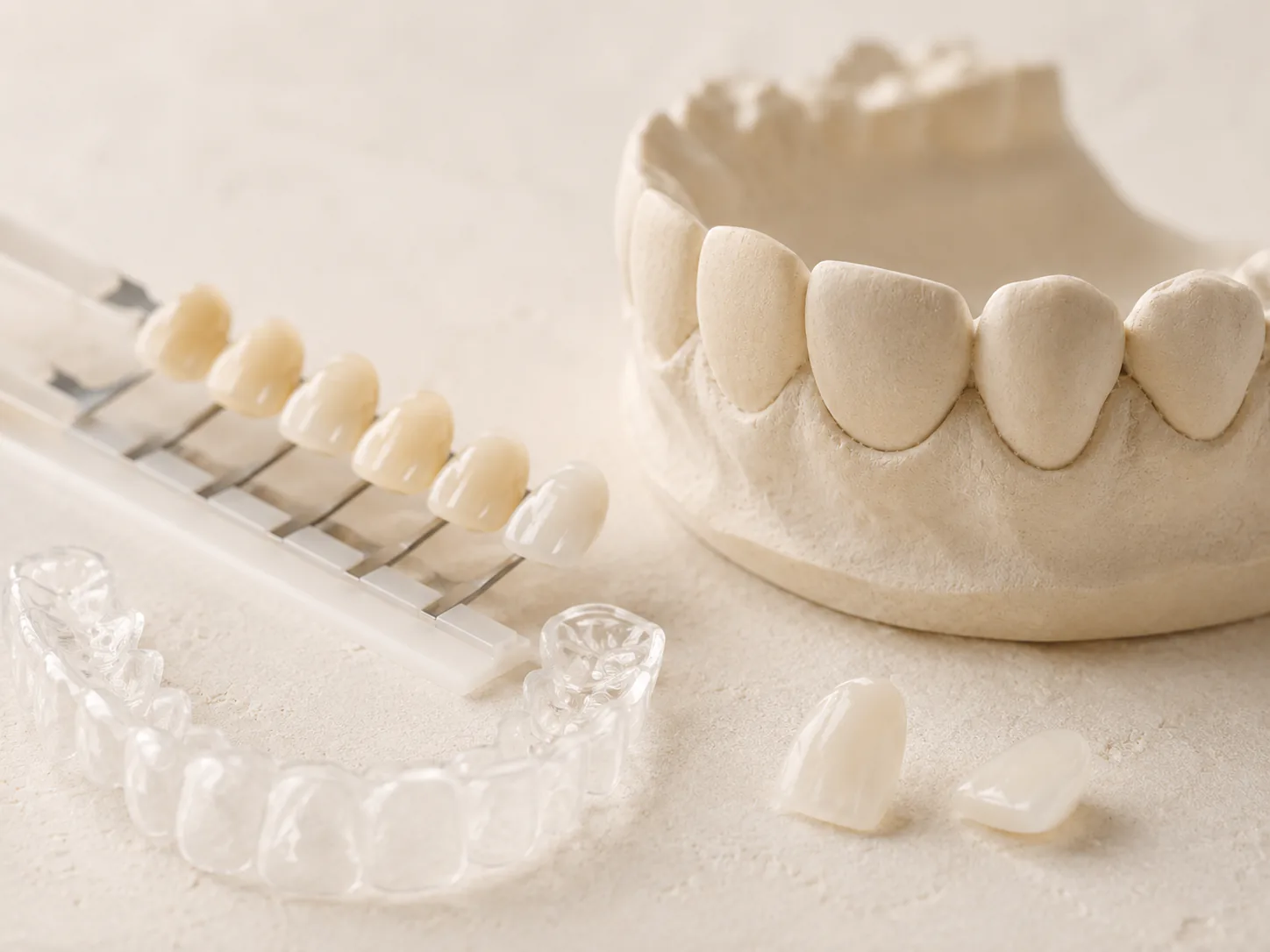
Many people feel that their teeth are not bright enough and first think about whitening. Others see veneer cases and wonder whether veneers would be a more complete solution.
Teeth whitening and ceramic veneers are both related to a whiter smile, but they address different concerns. Whitening mainly changes tooth color. Veneers may also change color, shape, size, minor gaps, and smile proportion.
What you may be noticing
Common concerns include overall yellowing, coffee or tea staining, teeth looking dull in photos, uneven color between front teeth, less translucency at the edges, small or uneven tooth shapes, visible gaps, or an unbalanced smile.
Teeth looking yellow does not necessarily mean that whitening is suitable. When tooth shape and alignment are broadly satisfactory, color adjustment can be evaluated first. If shape, gaps, wear, or alignment are also concerns, whitening alone cannot change those structures.
This is why a dentist may need to clarify whether the real concern is color, or the shape and proportion of the smile as a whole.
What needs to be judged first
First, the cause of the color change needs to be understood. External staining is different from a naturally deeper tooth color or internal discoloration related to tooth development, medication, trauma, or root-canal treatment.
Second, the condition of the tooth surface needs to be assessed. Enamel-development defects, white spots, cracks, old fillings, wear, and gum recession can all affect the choice between whitening and restorative treatment.
Third, it is important to identify whether shape is part of the concern. Whitening cannot make teeth longer or wider, close gaps, or correct a visibly tilted tooth or an unbalanced proportion.
Fourth, expectations need to be discussed. If the goal is teeth that are very white, very even, and different in shape, the discussion should not be limited to whitening alone.
How D4 evaluates the options
D4 first reviews the oral condition, tooth-color distribution, existing restorations, gum margins, tooth wear, and smile line. When useful, photographs, intraoral scans, and X-rays are considered to assess whether the color, structure, and bite are suitable for a whitening or veneer plan.
If veneers are being considered, a Mockup can help evaluate tooth length, curve, and overall proportion before definitive treatment. Veneers are not simply a way to make teeth white; they involve the relationship between teeth, lips, facial features, and bite.
Whitening and veneers do not always have to be treated as alternatives. For teeth with a deeper underlying shade that are suitable for whitening and have room to improve, D4 may recommend improving the natural tooth shade before planning veneers. Improving the underlying shade can reduce the need for masking and create room for a thinner, more translucent veneer design.
This does not mean that ultra-thin veneers or no-preparation veneers will necessarily be possible. Veneer thickness and tooth preparation depend on the remaining tooth shade, tooth shape, material, and bite. After whitening, time must be allowed for the shade to stabilize and before bonding conditions are suitable; the dentist will determine shade matching and restoration timing.
What patients should know before treatment
Teeth whitening mainly changes natural tooth color and is not intended to change tooth shape. Whether it is suitable and how much the color may change depend on the cause of discoloration and the oral condition. Results and how long they remain stable vary from person to person.
Tooth sensitivity or gum irritation may occur during or after whitening. Filling materials, crowns, and veneers do not whiten at the same time as natural teeth, so any color difference also needs to be considered. Discuss risks, expected changes, and later care with the dentist before treatment.
Ceramic veneers can address some color and shape concerns, but they usually involve tooth preparation, and removed tooth structure cannot be restored. The choice should balance tooth preservation, bite conditions, and future maintenance rather than treating veneers as a stronger form of whitening.
If tooth alignment is the main concern, orthodontics may sometimes be a better first step. Otherwise, too much tooth structure may need to be removed just to make the teeth appear more aligned.
Common misunderstandings
Is whitening less useful than veneers?
Not necessarily. For suitable teeth with a mainly color-related concern and healthy structure, whitening may be the more conservative and appropriate first step.
Are veneers just a stronger version of whitening?
No. Veneers are restorative treatment and involve changes to the tooth surface and shape design.
Are whiter teeth always more natural?
Natural appearance depends not only on brightness, but also on translucency, edge detail, the gum relationship, and harmony with the face.
When to consider a consultation
If your concern is mainly that your teeth look yellow, whitening can be evaluated first. If you also care about tooth shape, size, gaps, smile line, or overall proportion, a more complete aesthetic evaluation is recommended.
The key question is not simply whitening or veneers. It is first understanding whether you want to change color, shape, or the relationship of the smile as a whole.
References
For differences in how natural teeth and restorations respond, treatment assessment, and sensitivity considerations, see the American Dental Association: Whitening.
For tooth preparation and maintenance considerations with veneers, see ADA MouthHealthy: Veneers.
For the relationship between the underlying natural shade, veneer thickness, and translucency, see the effect of the underlying shade on final veneer color: an in-vitro study and the effect of ceramic material, color, and thickness on translucency: an in-vitro study. Research on whitening and veneer bond strength also supports considering bonding timing after whitening. These in-vitro studies help explain material and treatment-sequence considerations; they cannot promise an individual preparation amount or aesthetic result.
Related pathway
This article belongs to the aesthetic restoration pathway. You can continue reading about DSD, Mockup, veneers and orthodontics, and choosing between resin, veneers, and ceramic crowns.
For whitening assessment and D4’s professional background, continue to the D4 teeth-whitening assessment page.
FAQ
Will the shade change again after whitening?
Color can gradually change with diet, cleaning habits, and time. Regular maintenance and reducing staining foods and drinks can help keep the result more stable.
Do veneers always require tooth preparation?
Most veneers require some degree of tooth preparation, but the amount depends on tooth position, the need to mask color, and the final shape. The same preparation approach is not suitable for everyone.
Can veneers be done after whitening? Why might whitening come first?
Whitening and veneers can be planned in stages. For teeth with a deeper underlying shade that are suitable for whitening and have room to improve, D4 may recommend improving the natural tooth shade before planning veneers. This can reduce masking needs and create room for a thinner, more translucent design. It does not mean ultra-thin or no-preparation veneers will necessarily be possible. Veneer thickness and tooth preparation depend on the remaining shade, tooth shape, material, and bite. After whitening, time must be allowed for the shade to stabilize and before bonding conditions are suitable; the dentist will determine shade matching and restoration timing.
Can I whiten if I have old fillings?
Whitening mainly changes natural tooth color. Filling materials and crowns do not whiten at the same time. Whether whitening alone is appropriate and how any color difference should be managed depends on the condition of the restorations and your needs; it does not mean every old restoration must be replaced.