
Knowledge Center · AESTHETIC RESTORATION
Veneers, Ceramic Crowns, or Composite Resin: How Should You Choose?
Understand the differences between composite resin, ceramic veneers, and ceramic crowns, and why structure, color, bite, and long-term stability matter before choosing a restoration.
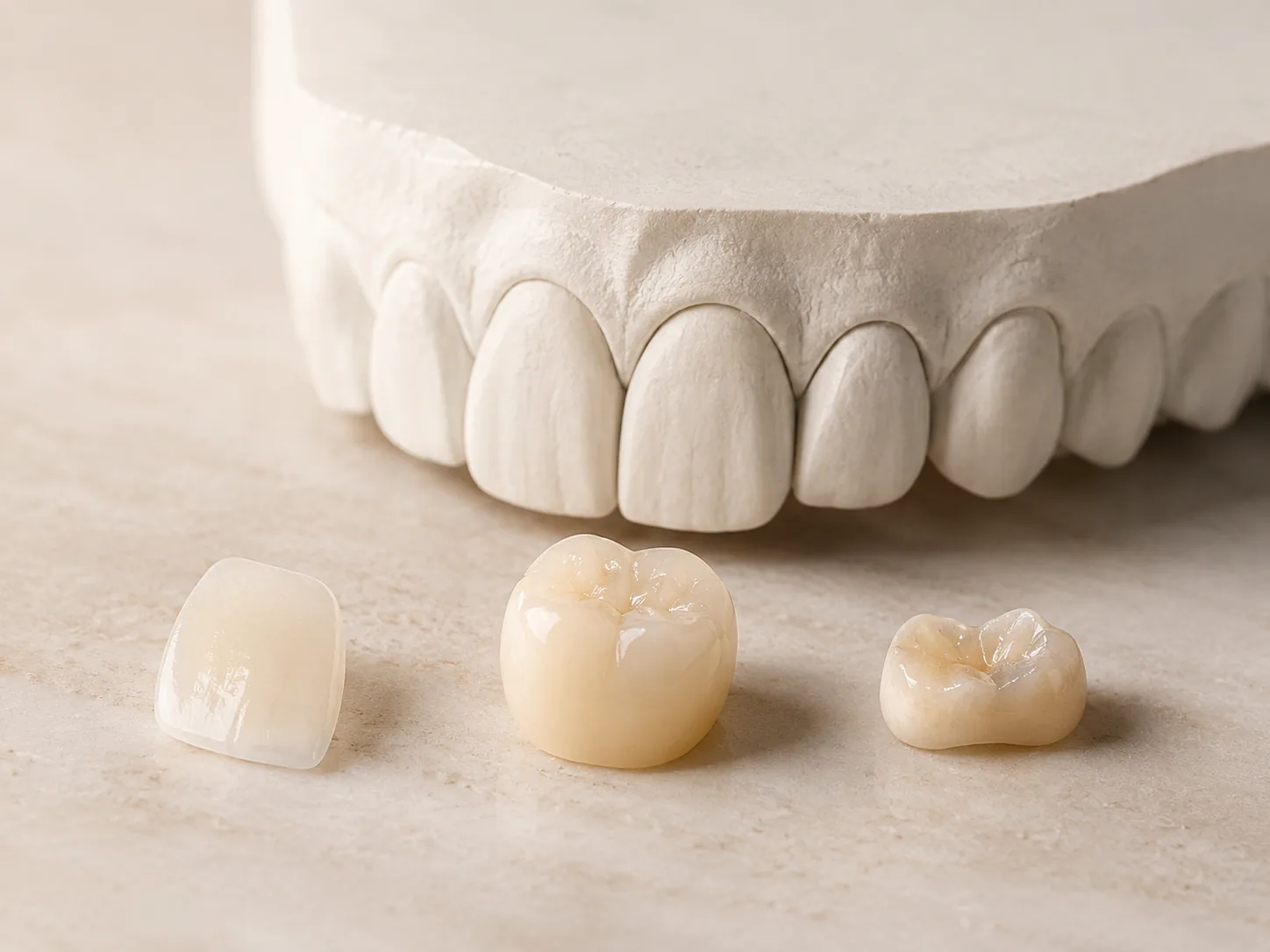
When patients want to improve tooth color, shape, small chips, or old restorations, the most common options they hear are composite resin, ceramic veneers, and ceramic crowns.
They may all seem to “make teeth look better,” but clinically they serve different purposes. The key question is not which material sounds most advanced, but which approach fits the tooth condition, treatment goal, and long-term stability.
The Problem You May Be Facing
Common situations include dark front teeth, visible gaps, small or uneven tooth shapes, chipped edges, stained old resin, unnatural crown margins, or an overall smile that feels out of proportion.
Patients often ask, “Am I suitable for veneers?” or “Are crowns stronger?” Before answering that, a dentist needs to understand how much healthy tooth structure remains, where the color problem comes from, whether the bite is stable, and whether the goal is a small local repair or a broader smile design.
What Really Needs to Be Evaluated
First, tooth structure matters. Teeth with good enamel and enough remaining structure can often be treated more conservatively. Teeth with large defects, cracks, old fillings, or root canal history may need more protection.
Second, the source of discoloration matters. Surface staining, mild yellowing, non-vital tooth discoloration, tetracycline staining, and fluorosis are not managed in the same way.
Third, tooth position and bite matter. Crowding, protrusion, deep bite, or bruxism can place excessive forces on restorations if they are not considered.
Finally, the treatment goal matters. Repairing one chipped tooth is different from redesigning the smile line of several front teeth.
How D4 Usually Checks
D4 usually evaluates the mouth, photos, intraoral scans, X-rays, bite records, periodontal condition, old restoration margins, and structural risks before recommending a material.
For multi-tooth aesthetic restorations, the relationship between teeth, lips, smile line, and facial proportion also matters. A Mockup may help preview length, width, curvature, and smile proportion before definitive treatment begins.
What Patients Should Know Before Treatment
Composite resin is often conservative, relatively simple to repair, and useful for small chips or local shape correction. However, it may stain or wear more easily over time.
Ceramic veneers are suitable when tooth structure is relatively intact and the goal is to improve color, shape, and proportion with better optical stability. They require careful evaluation of enamel, bonding conditions, and bite.
Ceramic crowns cover more tooth structure and may be appropriate for teeth with larger defects, extensive old restorations, or weakened structure. They are not usually the first choice for mild aesthetic concerns.
Common Misunderstandings
Are veneers always better than resin?
No. For small chips or minor shape correction, resin may be more conservative. Veneers become more meaningful when color, texture, and long-term stability are the main concerns.
Are crowns always stronger than veneers?
Not always. Crowns cover more tooth structure, but that does not mean every tooth should be prepared for a crown.
Do ceramic restorations require no maintenance?
Ceramic is stable, but gum margins, cleaning, bite forces, and regular checks still matter.
When to Consider a Consultation
If you are unsure whether whitening, resin, veneers, or crowns are appropriate, it is better to begin with a full evaluation rather than choosing a procedure first.
Related Pathway
This article belongs to the aesthetic restoration pathway. You may continue reading about DSD, Mockup, intraoral scanning, and bite evaluation before aesthetic treatment.
FAQ
What is the main difference between veneers and crowns?
Veneers usually cover the front surface of the tooth and are more conservative. Crowns cover more tooth structure and are used more often when protection is needed.
Can composite resin be a long-term solution?
It can be useful long term in selected small repairs, but it may require maintenance due to staining, wear, or edge changes.
Do dark teeth always need veneers?
No. The cause of discoloration should be evaluated first. Some teeth respond to whitening or internal bleaching; others may require ceramic treatment.
Can one or two front teeth be restored naturally?
Yes, but matching color, translucency, contour, and symmetry can be challenging, so careful planning is important.