Overall yellowing
Distinguish surface staining from the natural underlying tooth color before discussing whether whitening is suitable and what change may be expected.
 D4 Dental Clinic
D4 Dental Clinic · Shanghai
Teeth whitening begins with finding out whether it is suitable for you. D4 considers the cause of tooth discoloration, gum condition, and existing restorations, then discusses whitening options and how they may fit your overall smile.
PHILIPS ZOOM! Whitening Experience Center
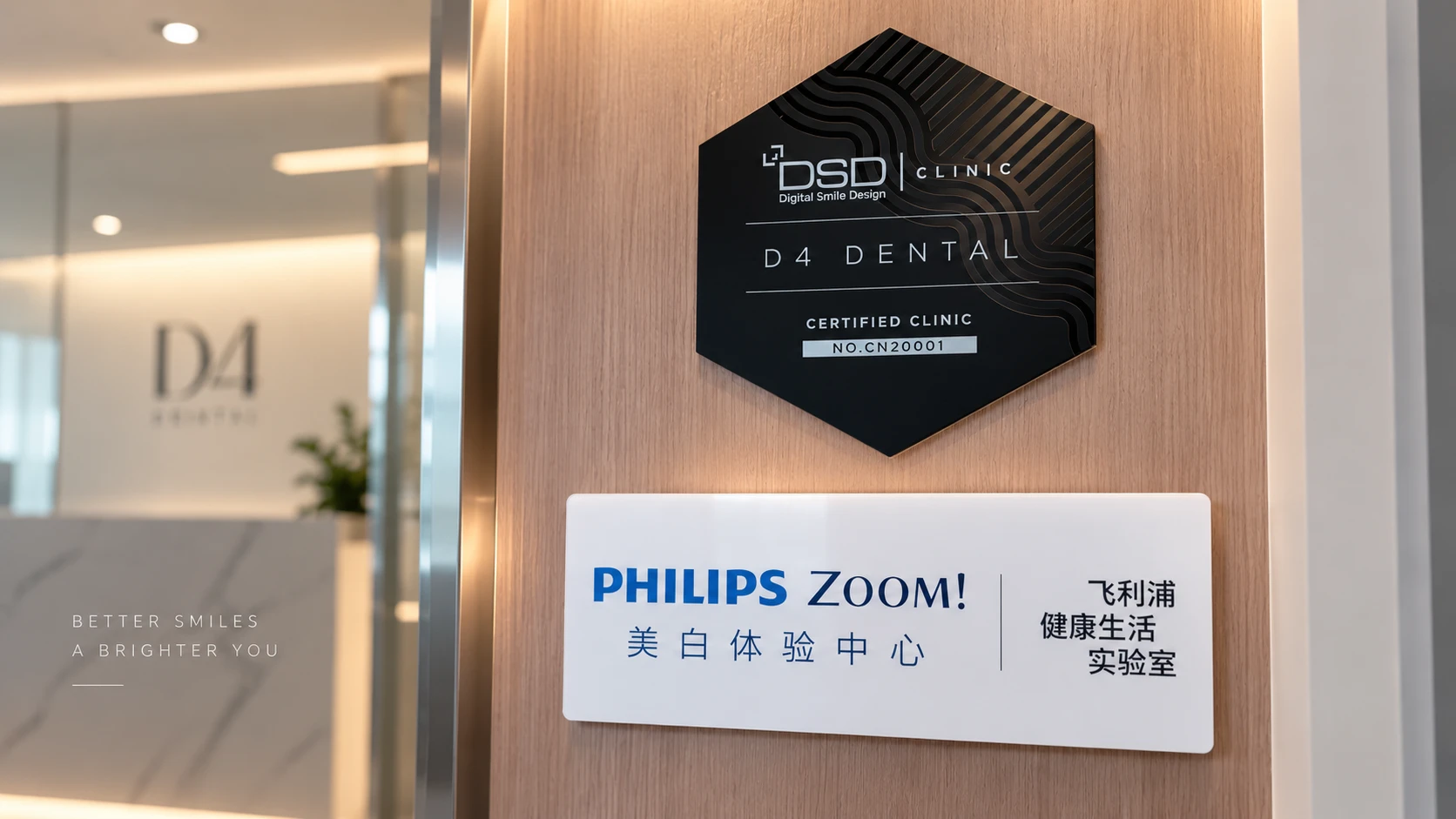
Whether whitening is suitable starts with understanding the cause of the color change, your oral condition, and any existing restorations. After an examination, we can discuss suitable options and what change may reasonably be expected.
Distinguish surface staining from the natural underlying tooth color before discussing whether whitening is suitable and what change may be expected.
First investigate why the tooth has changed color; a whole-mouth whitening plan should not be applied automatically.
Whitening mainly changes natural tooth color. Existing restorations do not whiten at the same time, so color difference and overall coordination need to be assessed.
First examine and address problems that need treatment, then decide how whitening should be arranged.
Understand the cause of discoloration, previous treatment, and sensitivity history, then record the current tooth shade.
Consider tooth shade, restorations, and your schedule when discussing a suitable approach, expected change, and points to note.
Arrange treatment according to the selected approach, monitor tooth and gum responses, and report any discomfort promptly.
Review color change and sensitivity, then discuss daily care and any later restorative planning.
For teeth with a deeper underlying shade that are suitable for whitening and have room to improve, D4 may recommend improving the natural tooth shade before planning veneers. Improving the underlying shade can reduce the need for masking and create room for a thinner, more translucent veneer design.
Veneer thickness and tooth preparation still depend on the remaining tooth shade, tooth shape, material, and bite; whitening does not mean that ultra-thin veneers or no-preparation veneers will necessarily be possible. After whitening, time must be allowed for the shade to stabilize and before bonding conditions are suitable; the dentist will determine shade matching and restoration timing.
Dr. Herman Hsu · Philips professional recognition
D4 founder Dr. Herman Hsu received the Philips “ZOOM! Whitening Leader of the Year” honor and, as a Philips Zoom! invited training lecturer, has shared the clinical application and practice of teeth whitening.
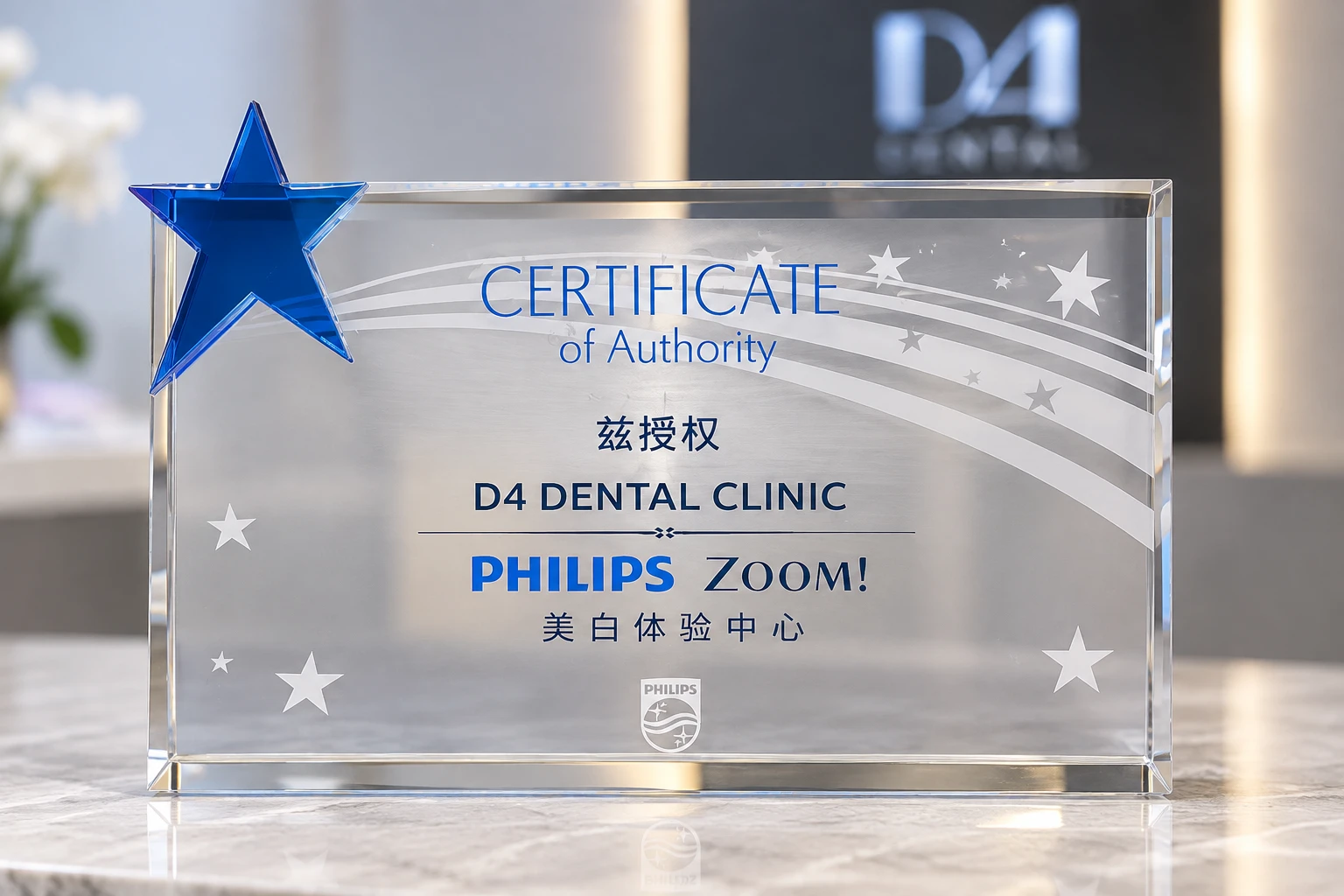
His collaboration with Philips has continued for more than eight years, covering professional training, clinical exchange, and oral-health education. D4 Dental Clinic is authorized as a PHILIPS ZOOM! Whitening Experience Center.


CONTACT D4
You can start by telling D4 which shade you would like to improve, about any previous whitening or restorative treatment, and whether you have experienced sensitivity. A specific whitening approach can only be determined after an oral examination.