
Knowledge Center · BITE AND BRUXISM
Why Bite and Bruxism Matter Before Aesthetic Restorations
Aesthetic restorations are not only about tooth color and shape. Bite, wear, and bruxism affect veneers, crowns, and long-term stability.
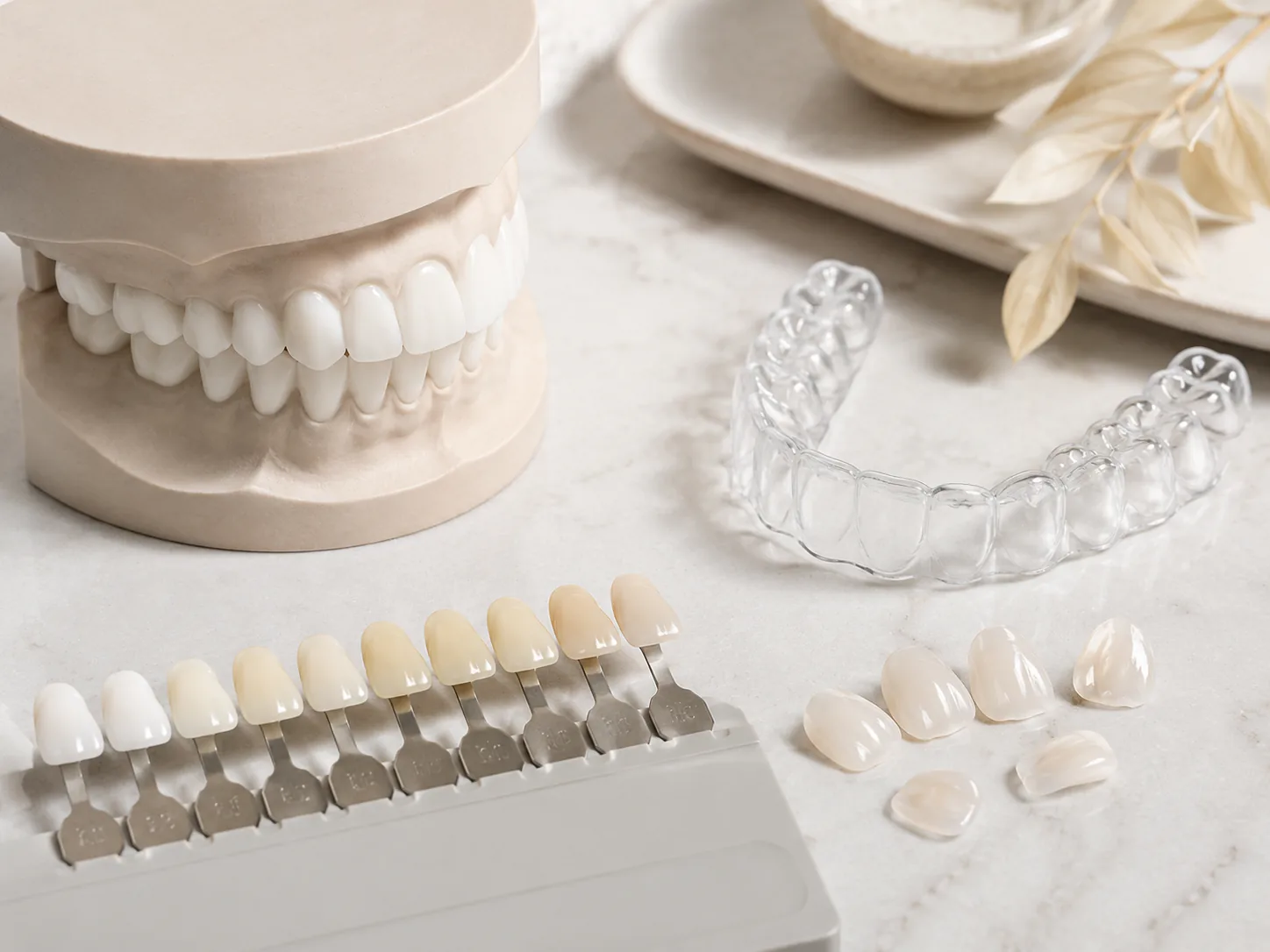
Aesthetic restorations are often understood as making teeth whiter, straighter, and more natural. Clinically, however, long-term stability depends not only on material and color, but also on bite.
If a patient has a deep bite, heavy front-tooth contact, visible wear, bruxism, or clenching, veneers and crowns may be exposed to complex forces. Without evaluating these forces, restorations may look good initially but become difficult to maintain.
The Problem You May Be Facing
Some patients notice front teeth becoming shorter, edges flattening, canine tips wearing down, jaw soreness in the morning, temple tension, or old resin, veneers, or crowns repeatedly chipping.
Others have no obvious pain but feel their teeth are becoming flatter or shorter. These changes may be related to bite forces, bruxism, or clenching.
What Really Needs to Be Evaluated
The first issue is where bite forces are concentrated. Are the front teeth carrying too much force? Is posterior support stable? Will the restoration be compressed or sheared during function?
The second issue is the wear pattern. Flat edges, shortened cusps, and shiny wear facets may suggest grinding or clenching.
The third issue is whether there is sleep bruxism or daytime clenching. Many patients are unaware of it until wear patterns or muscle tension are noticed.
The fourth issue is whether the material and design can handle the forces. Veneer edge design, thickness, bonding area, and occlusal contact all matter.
How D4 Usually Checks
Before aesthetic restorations, D4 usually evaluates intraoral findings, photos, intraoral scans, bite records, and X-rays when needed. The goal is to understand tooth wear, contact patterns, space, and periodontal support.
If bruxism or clenching is suspected, protective night guards, bite adjustment, staged observation, or reduced high-risk contacts may be discussed.
What Patients Should Know Before Treatment
Bite problems do not always mean veneers or ceramic restorations are impossible, but they affect design.
Some patients may need orthodontics or bite correction first. Others may benefit from Mockup or temporary restorations to observe the bite. Some may need night guard protection after treatment.
Common Misunderstandings
If a veneer chips, is the material bad?
Not necessarily. Material and bonding matter, but excessive bite forces can also be a major factor.
If there is no pain, is the bite normal?
Not always. Wear, chipping, muscle tension, or repeated restoration damage may appear before pain.
Does bruxism only affect back teeth?
No. It can affect front teeth, especially in patients with deep bite or unstable guidance.
When to Consider a Consultation
If you have tooth wear, chipping, repeated restoration damage, morning jaw soreness, or are planning multiple front-tooth restorations, bite evaluation should be part of the planning.
Related Pathway
This article belongs to the aesthetic restoration pathway. Continue reading about Mockup, veneers and orthodontics, intraoral scans, and restoration options.
FAQ
Can I get veneers if I grind my teeth?
Possibly, but the degree of grinding, tooth structure, bite pattern, and protection plan must be evaluated.
Do I always need a night guard?
Not always. If the restoration is at risk, a night guard may be recommended as protection.
Does bite evaluation make treatment more complicated?
It makes planning more complete. Identifying risks early is often more efficient than repairing failures later.
Can worn teeth simply be made longer?
Not without understanding the cause of wear, available space, and tooth strength.