
Knowledge Center · PERIODONTAL MAINTENANCE
What Causes Dental Black Triangles, and Why Can They Look More Noticeable After Orthodontics?
A black triangle between teeth is not always caused by gum recession, and it does not automatically mean orthodontic treatment failed. Learn how bone support, the gum papilla, tooth shape, contact points, and root position influence the appearance, and how periodontal treatment, orthodontics, composite, or porcelain veneers may be selected according to the clinical need.
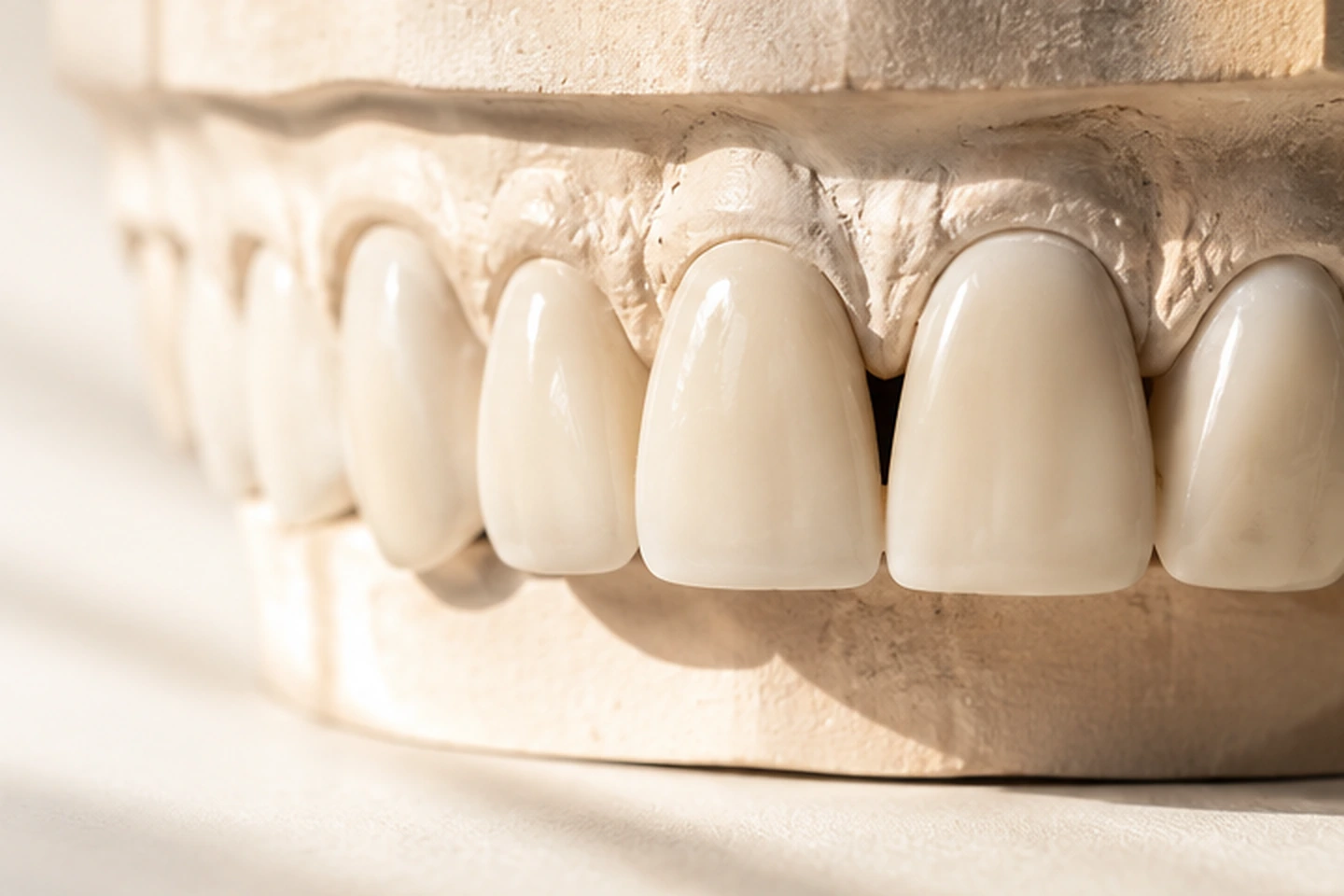
A black triangle is a visible space between adjacent teeth near the gumline. Periodontal treatment, orthodontics, and restoration can be combined according to the cause. Composite and porcelain veneers improve the appearance by refining tooth contours and contact areas. Where clinical conditions are suitable, porcelain veneers offer a long-term approach to color, gloss, and overall aesthetic harmony.
After orthodontic alignment, a space may become more visible because crowding no longer hides it, contact points change, tooth shape is easier to see, or root and periodontal conditions still need attention.
What creates a black triangle?
A black triangle is not black tissue. It is the darker background showing through where the interdental papilla does not completely fill the space below the contact area.
Periodontal support
The papilla depends on the surrounding bone and periodontal tissues. Inflammation, previous periodontal disease, bone loss, recession, or reduced support can limit the available fill. If gums bleed, remain swollen, or teeth are mobile, assess periodontal stability before planning cosmetic closure.
Tooth contour and contact area
Triangular crowns are wider near the incisal edge and narrower near the gums, so the contact may sit too high and leave more visible space. When enamel, space, and tooth position allow it, limited proximal reshaping with orthodontic movement can improve the relationship. Direct composite or porcelain can also refine contour and contact after the position is stable.
Root direction and orthodontic position
Crowns can look close while roots diverge or the contact relationship remains unstable. Adult orthodontic planning can assess axial inclination, root position, and movement before a restorative shape is finalized. IPR changes enamel contour and must be planned around the enamel, crown shape, space, and orthodontic goal; it cannot restore lost bone.
How can restorative treatment improve the appearance?
Composite: flexible for localized or staged change
When periodontal tissues are stable and tooth positions are reasonable, composite can add proximal contour and make the contact area look more natural. It is useful for a small localized adjustment and can be completed gradually as a staged or trial restoration.
Composite requires maintenance. It is more susceptible to staining, loss of gloss, and wear, so polishing or repair may be needed. A thin edge can chip or partially debond under heavier biting forces or less favorable bonding conditions. Contour, contact, cleanability, and gum health should be considered together.
Porcelain veneers: a valid long-term option
Porcelain veneers can improve a black triangle by designing the proximal contour and contact area, reducing the visible interdental space while coordinating tooth shape, proportions, and color. For patients who want long-term anterior aesthetics, veneers can be prioritized when periodontal tissues are stable, tooth position and bite are suitable, and available enamel supports bonding. Porcelain is generally more stain- and wear-resistant and helps maintain surface gloss and overall harmony.
The restorative area can be localized or part of a broader plan for several front teeth. Assess remaining tooth structure, gingival space, cleanability, and biting forces together. For material choices and sequencing, see veneers, crowns, and resin restorations and veneers and orthodontics.
When should tissues or tooth position stabilize first?
Immediately after orthodontics, gum and periodontal tissues may still be adapting. Small spaces can change as inflammation is controlled, hygiene improves, and the result settles. If the gums bleed or remain swollen, treat the active periodontal problem first. If root direction or new tooth positions are not confirmed, complete the relevant orthodontic or periodontal assessment before designing the restoration.
After periodontal tissues, tooth positions, and contact relationships stabilize, use the long-term aesthetic goal to set the restorative plan and timing. An intraoral scan can help compare alignment, contacts, and cleaning space over time.
What is a practical treatment sequence?
- Assess periodontal support and control active inflammation.
- Confirm tooth position, root direction, contact relationships, and bite.
- If tooth contour is the main issue, consider planned proximal reshaping, composite, porcelain, or a combination that fits the remaining tooth structure.
- If several aesthetic concerns need coordination, plan the restorative area and sequence together.
- Review contour, floss access, gingival space, and maintenance after the result is stable.
What should a consultation cover?
Ask:
- Is the triangle mainly related to periodontal support, tooth shape, contact area, or tooth position?
- Are the roots, bite, and periodontal tissues stable?
- What would IPR change, and is enough enamel available?
- Would composite be localized, staged, or trial treatment?
- Would porcelain better serve the long-term color, gloss, wear, and coordination goals?
- How will the contour remain cleanable?
A black triangle is small in appearance but may reflect several structures. The best plan addresses the cause and the desired aesthetic result together. If you are also comparing a front gap with a black triangle, read Front Tooth Gaps: Orthodontics, Composite Bonding, or Veneers?.
FAQ
Are black triangles after orthodontics a sign of gum recession?
Not necessarily. Reduced periodontal support can contribute, but crown shape, contact-point position, root direction, and spaces revealed after alignment can look similar. Assess the periodontal tissues, tooth position, roots, and records before deciding whether restorative treatment is appropriate.
Can black triangles heal on their own?
Small spaces may change as inflammation improves, tissues stabilize, or orthodontic refinement is completed. If periodontal support, tooth shape, or tooth position is the main factor, address that cause first; once the foundation is stable, observation or restoration can be planned around the long-term aesthetic goal.
Can IPR treat black triangles?
When tooth shape, enamel, space, and the orthodontic plan are suitable, limited interproximal reduction with tooth movement may improve the contact relationship. IPR changes enamel contour; it cannot restore bone that has been lost, so periodontal and root conditions still need assessment.
Is composite or a veneer better for black triangles?
Composite is flexible for a localized, staged, or trial contour change. Porcelain veneers are a valid long-term option when tooth contour, contact area, color, proportions, enamel, bite, and periodontal conditions support restoration. Porcelain is generally more stain- and wear-resistant; composite may need polishing or repair and can chip or partially debond under unfavorable forces or bonding conditions.