
Knowledge Center · AESTHETIC RESTORATION
Front Tooth Gaps: Orthodontics, Composite Bonding, or Veneers? Start With the Cause
A front tooth gap does not always call for the same treatment. Learn how tooth position, tooth shape, periodontal support, and restorative goals influence whether orthodontics, direct composite bonding, or veneers should be considered.
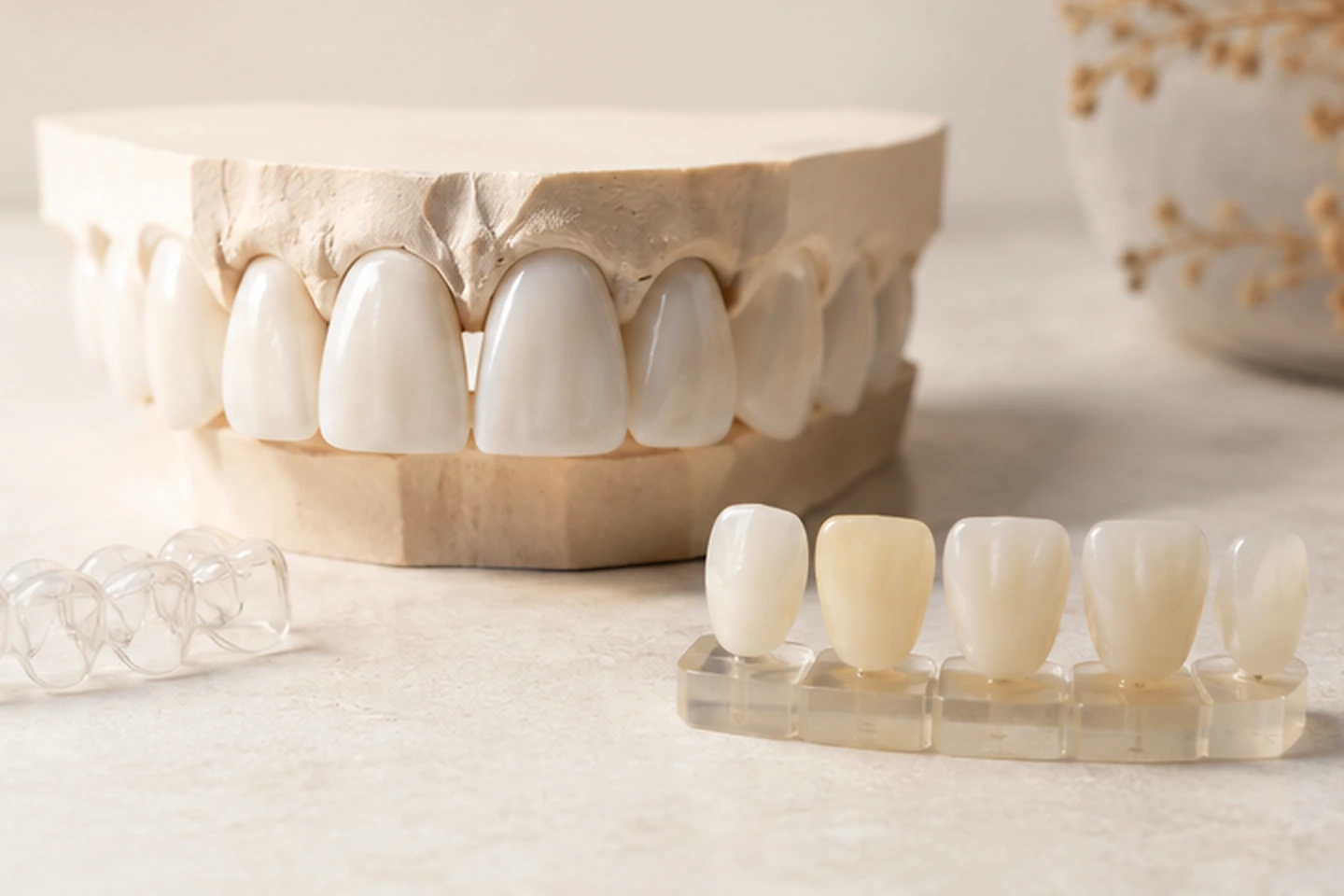
Front tooth gaps are treated according to their cause and the result you want. If tooth position is the issue, orthodontics deserves priority. If tooth size or proportion leaves a small space, composite or porcelain may help. For long-term color stability, gloss, wear resistance, and coordinated anterior aesthetics, porcelain veneers can be the preferred restorative option when available enamel, bite, bonding, and periodontal conditions are suitable.
A gap is a visible result, not a diagnosis. It may reflect teeth positioned apart, teeth that are small relative to the arch, changes in periodontal support, a contact relationship that needs refinement after orthodontics, or several aesthetic concerns at once. Identify the main cause and the long-term goal before comparing materials.
What changes the treatment choice?
Tooth position, tooth size, tooth shape, periodontal support, and the final contact relationship all affect the plan. A space caused mainly by angulation, crowding, rotation, root direction, or relapse calls for a position assessment. A space caused by small or triangular teeth may be approached through contour and contact-area changes. A new adult gap also needs periodontal and movement assessment before cosmetic closure.
When position is the main concern, adult orthodontic planning can clarify tooth position, root direction, space distribution, and contact relationships. The goal is to match the treatment area to the cause and the desired result.
When does each option fit?
Orthodontics: when tooth position leads
If the teeth angle apart, the arch is unbalanced, roots are not ideally directed, or the space follows crowding, rotation, or relapse, orthodontic planning should come first. Closing a positional space with restorative material alone can make teeth too wide while leaving the underlying position unchanged.
Composite: a localized, staged option
When periodontal tissues are stable, tooth positions are reasonable, and the gap reflects tooth size or proportion, direct composite can close a limited space with a controlled addition to the proximal surfaces. It can be completed directly, adjusted gradually, and repaired more easily than porcelain. It can also serve as a staged or trial restoration so the proportions and appearance can be observed before a broader decision.
Composite still needs careful design. Excess width can make the teeth look heavy, while an overbuilt or tight contact can hinder flossing. Composite is more susceptible to staining, loss of gloss, and wear, so repeated polishing or repair may be needed. A thin edge used to close a gap can also chip or partially debond under heavier biting forces or less favorable bonding conditions.
Porcelain veneers: when long-term coordination matters
If maintaining the front teeth’s shape, color, and overall harmony over the long term is the goal, porcelain veneers can be prioritized for evaluation when tooth position, bite, available enamel, bonding conditions, and periodontal health support them. Porcelain is generally more resistant to staining and wear and better supports surface gloss. It can refine proximal contours and contact areas while coordinating the color, shape, and proportions of the front teeth.
The restorative area should be designed around the gap size, remaining tooth structure, available enamel, and bite. Veneers, crowns, and resin restorations each serve a different role.
What if the gap appears after orthodontics or in adulthood?
A small space after orthodontics may reflect a contact relationship, root direction, triangular tooth shape, limited gingival fill, or a position that still needs refinement. Sometimes a small positional adjustment or limited reshaping is enough; sometimes composite complements orthodontics; sometimes stability should be observed before a restoration is planned. A dark triangle near the gumline deserves the separate assessment described in dental black triangles.
A new gap in adulthood should be assessed before cosmetic closure. Periodontal support, inflammation, tooth movement, retention, bite habits, and other local factors may be involved. Check periodontal stability and tooth position first, then decide whether orthodontics, restoration, or observation best fits the cause.
How should treatment be sequenced?
- Identify whether position, tooth size, periodontal support, or broader aesthetics is driving the space.
- Stabilize active periodontal problems and confirm tooth position, root direction, and bite.
- If the teeth are reasonably positioned, compare a localized or staged composite option with a long-term porcelain plan.
- If orthodontics improves position first, the later restorative area may be smaller and more conservative.
- When several front teeth need coordination, consider veneers and orthodontics as one sequence rather than separate decisions.
What should be checked before closing a gap?
A consultation should cover:
- Why the space appeared and whether it is stable
- How the final tooth width, proportion, and contact area will be designed
- Whether composite is being used for a localized, staged, or trial improvement
- Whether porcelain is appropriate for the long-term color, gloss, wear, and coordination goals
- Whether remaining tooth structure, enamel, bite, periodontal tissues, and floss access support the plan
A well-designed result closes the gap naturally, balances tooth proportions, and keeps the contact area easy to clean. Orthodontics, composite, and porcelain can also be combined in stages to suit the clinical conditions and long-term aesthetic goals.
FAQ
Does a front tooth gap always need orthodontics?
Not necessarily. If tooth position, root direction, crowding, or relapse is driving the space, orthodontics deserves priority. If the teeth are reasonably positioned and the gap reflects tooth size or proportion, a restorative option may be appropriate. The cause should be assessed before choosing how to close it.
Can a front tooth gap be closed directly with composite bonding?
In suitable cases, yes. Composite can close a limited gap with a controlled addition when periodontal tissues and tooth positions are stable. It is flexible for localized, staged, or trial improvement, but may stain, lose gloss, wear, chip, or need polishing and repair, so contact design and cleaning space matter.
Will veneers make a front tooth gap look better?
If long-term front-tooth shape, color, and harmony are priorities, porcelain veneers can be preferred when tooth position, bite, available enamel, and bonding conditions are suitable. Porcelain is generally more stain- and wear-resistant and retains gloss well. Composite is more flexible for localized or staged changes but may need maintenance.
Is it normal for a new front tooth gap to appear in adulthood?
A new adult gap should be assessed before cosmetic closure. Periodontal support, inflammation, tooth movement, retention, bite habits, root position, and other local factors may be involved. Stabilize the underlying condition first, then decide whether orthodontics, restoration, or observation fits the cause.